Showing posts with label natural medicine. Show all posts

Building a Medicine Cabinet: Elderberry Syrup


Elderberries

We have officially entered the coldest month of the year for us Texans. In the last few weeks our house had gotten quite dry, and I hadn't been running the humidifier as often as a should. It wasn't surprising, then, when the husband recently came down with a cough and sore throat. He promptly made himself a pot of tea made with echinacea, marshmallow (the plant, not the fluffy white cylinders), fennel, orange peel, and cinnamon bark - we use Traditional Medicinals Throat Coat. But, after a few days the cough and sore throat were still there. Master Tonic should have been the first line of defense, but we were lazy and didn't reach for the bottle as early as we should have. The Master Tonic, while extremely powerful, does have quite a zing, and therefore, isn't my husband's favorite medicine (although, he did take it with him to work the past two days!). 

As with any sickness, it is important to first reflect on your diet, the amount of sleep you're getting, exercise, and the stress in your life. Remove all refined sugars, if they are still present, from your diet. Drink copious amounts of homemade chicken broth, and increase your daily servings of lacto-fermented foods. Take more time to relax, avoid stressful activities, if possible, and go for a walk once a day. Your body needs to rest, so find the time to nap, and go to bed earlier. Once you have thought over these steps, use herbal medicine to ease your symptoms and aid your healing. 
Knowing my husband's throat was one of the main factors in his illness, I decided to whip up a batch of elderberry syrup. The berries from the elder flower are highly esteemed for their use in fighting colds, flus, and upper respiratory infections. Both the flowers and the berries of this plant work well in reducing fevers, if present, by inducing sweating. The elder plant contains immune-enhancing properties, and tends to be especially effective when combined with  echinacea. An important note: use only blue elderberries, as the red elderberries are potentially toxic. Also, never eat elderberries that haven't been cooked yet.
I also decided to use other ingredients to make this syrup: cinnamon, cloves, ginger, and raw honey. Each of these ingredients adds its own particular benefit. Cinnamon has antiviral and antiseptic qualities, and increases one's circulation. Cloves are known to have the highest antioxidant quality than any other food. They also have germicidal benefits which help fight colds and flus. Ginger is a classic herb of traditional Chinese medicine, and is highly regarded as a primary herb for reproductive, respiratory, and digestive systems. In this case, it is used to increase blood circulation since it is a warming herb. Finally, the raw honey is used for its antibacterial qualities, and for its ability to make the syrup more palatable.
Lastly, I buy my herbs from Mountain Rose Herbs or the Bulk Herb Store. I am just beginning to be able to grow herbs consistently, and I hope to expand my meager collection, but until then these two companies offer high quality products at reasonable prices (I don't receive any sort of benefit from promoting either of them). It only takes about 10 minutes of prep time, and then 20-30 minutes of cooking time to end up with a fantastic syrup that your family will think is delicious. The best part is that it will help your family through the winter flu blues!

Elderberry Syrup
Ingredients:
1/2 cup dried elderberries, or 1 cup fresh elderberries
1 cinnamon stick
5 cloves
1 tablespoon fresh grated ginger
2 cups filtered water
1 cup honey

Instructions:
1. In a small pot add the elderberries, cinnamon stick, cloves, ginger, and filtered water. Cover, and bring to a boil.

2. Once the water has boiled, turn the stove down to a low simmer for 20-30 minutes. Keep the pot covered. After this time the liquid should be reduced by half.
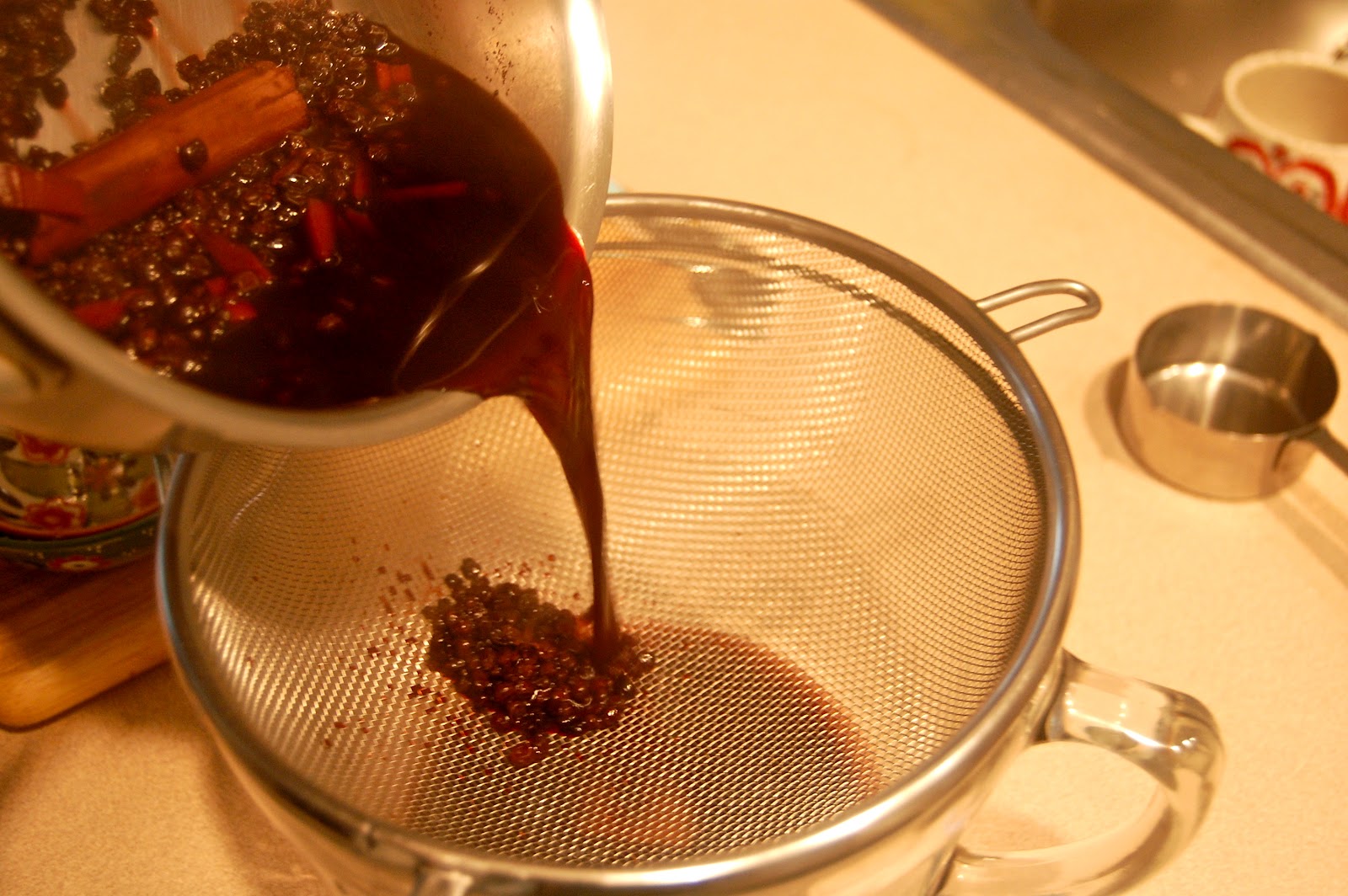
3. Strain the liquid into a bowl. Take a spoon and push the berries down to squeeze out the liquid.
4. Add the honey and stir until thoroughly combined.
5. Pour into glass jars (I like to use dark amber jars). In the fridge the syrup will last for only 2 weeks, however, you can easily store the syrup in the freezer and pull it out when a bout of illness strikes.


Dosage: Take 1 tablespoon/day to prevent illness, or take 1 T/hour if you are already experiencing cough and sore throat symptoms. Children under 12 years of ago can take half the adult dose (1 - 1 1/2 teaspoons). Toddlers can take 1/4 of the adult dose (a little less than a teaspoon).

There are thousands of natural remedies for all sorts of ailments. 
What topics are of interest to you? 

This post was shared at The Healthy Home Economist's Monday Mania,  Real Food Forager's Fat Tuesday, and Kelly the Kitchen Kop's Real Food Wednesday.

The Incredible Healing Properties of Broth: Not Just an Old Wives' Tale


“Good broth will resurrect the dead.” South American proverb

When I first began changing over our family’s diet to traditional foods, the first task I wanted to accomplish was learning how to make chicken broth. I’d never in my life done such a thing, and at that point in time, it seemed quite a steep task. I can chuckle at that thought now, because I quickly found out how easy it is to make broth! In fact, I know I’ll never go back to buying those ridiculously expensive, bland-tasting plastic boxes of broth from the store. No, siree!
Why would I want to learn how to make broth? Bone broth is highly-nutritive, and it’s one of the easiest to digest foods on the planet. It is incredibly soothing to the intestines, especially if you have any sort of digestive problem (which I do - more on that later). Every traditional culture made and ate animal and/or fish stocks. Not only were they being resourceful by using every part of the animal, but they were also being smart because broth provides bountiful benefits to the body. 
Have you ever heard the term, “Jewish penicillin”? This name was given to the chicken broth made by our Jewish ancestors because of its ability to heal colds, flus, and many sicknesses. It’s not just an old wives’ tale; science validates this long-held belief. The broth you make today will do the same.
The Power of Broth
The best part about broth is that it contains numerous minerals in a form that is most easily assimilated into the body: calcium, magnesium, phosphorus, silicon, sulphur, and many other trace minerals. Broth also contains amino acids that help to detoxify the body. The cartilage and tendons that are used to make broth provide chondroitin sulphates and glucosamine that help with arthritis and joint pain - both of which are pricey supplements sold in health stores today. 
Bone broth is rich in gelatin. Gelatin, probably the magic ingredient in broth, helps with a multitude of symptoms and sicknesses: ulcers, tuberculosis, diabetes, muscle diseases, jaundice, cancer, irritable bowel syndrome, and the list goes on. Fish broth, especially, is an excellent source of iodine and other substances which strengthen the thyroid.
As I mentioned earlier, bone broths are excellent for the digestive system. Many of us suffer from various intestinal issues: leaky gut, IBS, Crohn’s disease, etc. Bone broth is a warming and therapeutic drink that is particularly gentle on the stomach. It strengthens the gut wall and helps to reduce inflammation.
Store-bought, canned or boxed broths, and bouillon cubes pale in comparison. Many contain MSG, other additives, and salt in a form that’s not beneficial to you. Additionally, these broths are generally lacking in the all-important ingredient gelatin. The benefits of homemade broth trump store-bought broth, but what about the cost comparison?
The Frugality of Broth
Compared to a quart-sized box of bone broth which may cost you $4.25, especially if you’re purchasing the organic version, making broth at home will cost you pennies - possibly only the electricity used to cook it. I use the bones leftover from the chicken I’ve already purchased for our family to eat. I freeze the bones and giblets until I’m ready to make broth. When I’m ready, I put it all into a big stock pot, throw in leftover vegetable scraps, eggshells from pastured hens (for added calcium), and possibly a few chicken feet (great for gelatin). Then I douse it all with a couple tablespoons of raw apple cider vinegar. The vinegar helps to extract the minerals from the bones. I heat the soup for about 24 hours, and in the end, I have a rich, fragrant, golden masterpiece. If you consider the price of the vegetables and vinegar, then the broth might cost a couple dollars and that’s being generous - this makes over a gallon of broth! Bone broths are both nutritious and frugal - you can’t beat that!
Uses for Broth
Our family goes through at least a gallon of bone broth a week. I am currently following the GAPS Diet, a scientifically-designed diet to heal the intestinal tract. This diet calls for drinking copious amounts of bone broth, so we tend to make and eat lots of soups. However, even if I wasn’t following the GAPS I still would simmer a gallon each week, not only because it’s frugal and healthy, but because it’s delicious, too! In addition to soups, broth is a great base for gravy and sauces. Cooking vegetables and grains in broth adds both nutrition and rich flavor. Use it to baste meats, braise vegetables, or heck, just pour yourself a mug, add some sea salt, and enjoy. 
Are you ready to bust out that stockpot? Why not save yourself some money, add some flavor to your family’s meals, and help them stay healthy by making it a goal to make a nutritious bone broth this week. In my next post I’ll teach you how to make lip-smacking, health-promoting chicken broth. After you make it once, you’ll be hooked. I promise!


What is your favorite type of bone broth: chicken, beef, lamb, fish? 

Building a Medicine Cabinet: Master Tonic


It's getting to be that time of year again. Winter is quickly approaching, and soon the cold and flu season will be upon us. At least down here in Texas, we have much milder winters. Growing up in Chicago, the first snowstorm could sometimes come in October. I'm enjoying the slow transition into winter, and eager to see what "winter" really means down here (we just moved down in August). In preparation for the colder temperatures and the sniffles and coughs that accompany them, today I've brought a recipe for starting your own medicine cabinet: the Master Tonic.
Not only do you feel empowered when you make medicine for your family, but it's also safer than popping a pill or going straight for those antibiotics. This stuff is not named Master Tonic for nothing! This will be your "go to" at the first sign of illness. It is your natural antibiotic. The power of this tonic should not be underestimated. It will help you through the most chronic conditions and stubborn diseases. It stimulates maximum blood circulation while putting the best detoxifying herbs into the blood. Let's take a look at the recipe:
Master Tonic:
Raw Apple Cider Vineger (I use Braggs, make sure yours has the "mother")
1 part fresh chopped organic garlic cloves
1 part fresh chopped organic white onions (or hottest onions available)
1 part fresh grated organic ginger root
1 part fresh grated organic horseradish root
1 part fresh chopped organic cayenne peppers (or hottest peppers available: habanero, African Bird, Scotch Bonnets, etc.)
Large Glass Jar w/Cover
*** You may want to wear gloves when chopping and grating the peppers. I used my food processor for all of the chopping/grating, but I still wore gloves.

1. Fill jar 3/4 of the way full with equal parts by volume of the above fresh chopped and grated herbs.
2. Then fill jar to the top with the apple cider vinegar. Close jar tightly and shake vigorously. Then top off with more apple cider vinegar if necessary.
3. Shake at least once a day (or as often as you walk by the jar) for two weeks, then filter the mixture through a clean piece of cotton (old t-shirt, etc.). Bottle into dark bottles (amber glass), and label.
Dosage: At the first sign of sickness, take 1-2 tablespoons, two or more times daily. Gargle and swallow. DON'T dilute with water. If you are already in the midst of sickness, take 1-2 tablespoons 5-6 times a day. This should deal with most conditions.


What is your favorite homemade medicine?